Our world has been rocked by three significant geopolitical events across two continents in recent months. And it’s a serious “heads up” to those of us who host or produce domestic and offshore corporate meetings and events …
Venezuelan dictator Nicholás Maduro was captured in a raid by U.S. troops in Caracas in early-January, sparking extreme violence and mayhem in the South American capital.
The killing of drug kingpin “El Mencho” led to Cartel-fueled violence and destruction that has robbed the spirit of party/resort town Puerto Vallarta on Mexico’s Pacific Coast.
And more recently, U.S.-Israeli air strikes on Iran eliminated a sinister ruling regime, but prompted retaliatory air strikes across a dozen countries in the surrounding Gulf region. Closer to home, a mass shooting at a popular Austin, TX nightspot three days ago killed three [including the gunman], injured 14 more, and appears to be connected to the US-Israel assault on Iran. In December and January, civil unrest rocked Minneapolis for the second time in six years.
In all of these occurrences, shops, restaurants, conference facilities, and tourist hotel properties or gathering spots were negatively impacted, whether operationally, structurally or both.
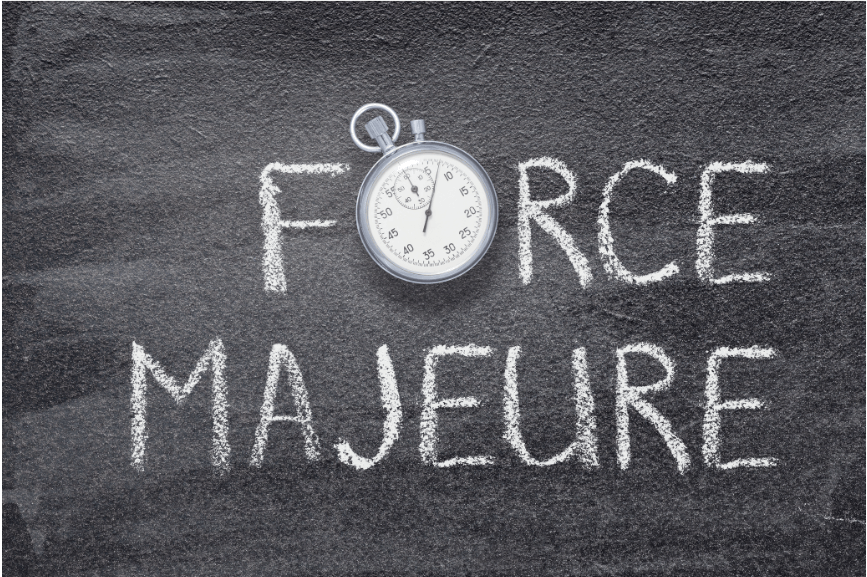
If you have strong Force Majeure language in your contract, you have options.
If you have generalized Force Majeure language in your contract, you may have no options.
It’s all up to you and your level of skill and insight when it comes to crafting contractual language that factors in all negative potentialities beyond your control and/or the control of the venue you’re utilizing.
I’ll leave the moral/political right-or-wrong of these events to others to debate at another time. I am 100% focused on the reality these situations put upon those of us who toil in the world of events. Our entire industry experienced the importance of Force Majeure language during the pandemic and 25 years ago in the horrific aftermath of 9-11. Now, it seems, we’re fully back in the fray.
One thing we can all agree on is that’s it’s more important than ever to be hyper-vigilant and pro-actively protective when planning a corporate meeting or event, especially in an offshore location where instability is more likely than what we’re accustomed to in America … typically. Unfortunately, these are not typical times.
It’s high time to double-down on protections.
Let’s dust off your understanding of Force Majeure …
Force Majeure [French for “superior force”] is a legal term used in contracts for unexpected, uncontrollable events – such as wars, terrorist attacks, civil disturbances, natural disasters, major strikes, or government shutdowns — that make it impossible for one or both parties to successfully execute what the contract states. When a Force Majeure clause kicks in, it can temporarily or permanently excuse the affected party or parties from liability for not performing, as long as the unexpected event was beyond their control and not caused by their own negligence.
Elements of a strong Force Majeure clause
Generally speaking, qualifying events for a Force Majeure clause fall in three categories: Natural disasters, government actions, and human conflicts. But beware of generic, open-to-ambiguity wording that can be interpreted differently by affected parties [or the court system]. Specificity, and factoring in benchmarks and official declarations are imperative to avoid any confusion.
For instance, do not utilize generic, under-one-umbrella wording like “acts of God” without itemizing potential occurrences such as earthquakes, hurricanes, tornadoes, floods, lightning strikes, wildfires, avalanches, mudslides, storms, volcanic eruptions, tsunamis, etc. For public health emergencies, include widespread disease outbreaks, epidemics, pandemics, quarantines, shortages of medical supplies, inadequate numbers of medical professionals, etc.
Human/government-related items should also be very specific, including declaration of war, terrorism, civil unrest, foreign invasion, hostilities, riots, rebellion, sabotage, embargoes, blockades, trade restrictions, newly enacted laws impacting your contract after signing, local/state emergency orders, national emergencies, etc. Labor disruptions should be listed such as strikes, lockouts, factory closures, labor stoppages, etc. Local infrastructure considerations such as fire, explosion, power/transport shortages, communication infrastructure breakdowns, transportation shutdowns by official order, etc.
These lists are typically tagged at the end of the clause with catch-all language such as “or other events beyond reasonable control” in the event a circumstance occurs that wasn’t listed but clearly imperiled and impacted your program.
Force Majeure simply cannot be left open to interpretation. If you opt to cancel your program due to an unforeseen significant event but did not have strong language and clarifying standards in place, you risk losing your entire, significant investment. Contractual wording must be very, very specific with benchmarks and criteria built in such as official declaration[s] or state-of-emergency announcements issued by municipal, state and/or federal authorities.
Lean on your meeting planning partner to help guide you through contract negotiation – including strong Force Majeure wording – and don’t leave yourself financially exposed. Our team at dynami is always here to assist.
Cheers,
Kenneth Jones